Al search has changed the B2B buying process faster than most marketing teams have noticed. Buyers are no longer beginning their vendor research on Google. They’re asking ChatGPT, Perplexity, and Claude which tools to consider and then visiting websites only after they’ve already formed a shortlist.
KEY FINDINGS
- Al search has become the primary category research channel for B2B buyers, preceding Google searches by days or weeks in the decision journey.
- Brands that appear in Al responses are 3.4x more likely to be included in the final vendor shortlist – before a single keyword search occurs.
- Only 15% of brands hold the #1 citation position in Al responses for their primary category terms. 20% aren’t cited at all.
How Search Has Changed in the Era of Al Answers
Traditional search returned a list of links. Buyers would evaluate 5-10 results, visit several websites, and form their shortlist over hours or days. Al search returns a single synthesised answer – selected, validated, and presented as a definitive recommendation. The buyer’s evaluation now happens before they visit any website.
3.4x
more likely to be shortlisted if you appear in Al responses
Source: Birdeye State of Al Search 2026
This shift amplifies the winner-take-most dynamic already present in traditional SEO. In ranked search, position 1 gets ~30% of clicks. In Al search, the #1 cited source can account for the majority of buyer consideration. The gap between “appearing” and “being selected” has never been wider.
- Search is shifting from navigation to resolution buyers want an answer, not options to evaluate
- Al search engines filter sources before presenting a response – your site’s credibility is evaluated before a buyer ever visits
- Citation position in Al responses directly influences buyer consideration – being cited third is meaningfully different from being cited first
- Many brands appear occasionally but aren’t consistently selected -inconsistent citation is the new page 2
The Al Trust Stack: Why Some Brands Get Cited and Others Don't
Al search engines don’t rank websites. They evaluate a layered set of signals across multiple sources to determine which brands to trust, cite, and recommend. Understanding this stack is the first step to improving your position.
Key insight: Al search engines prioritise information that is clear, structured, consistent, and corroborated across the sources they evaluate.
The Four Layers of Al Visibility - And Which You Control
Based on how Al engines generate responses, your brand’s citation visibility comes from four layers. They’re not equal and you don’t have equal control over all of them.
Owned content is the only citation layer brands fully control. It’s also the one most companies have done least work to optimise for Al readability.
What This Means for B2B SaaS SEO Strategy
For B2B SaaS companies, the implications are specific. Your category is being researched on Al platforms before buyers open a comparison site, review platform, or your website. The question isn’t whether Al search matters – it’s whether you’re visible in the moments that shape shortlists.
80%
of brands are cited at least once in Al search responses
20%
of brands never appear in their own category’s Al responses
- Build owned content that directly answers real customer questions not just content targeting search volume
- Structure service and pricing pages with clear headings, direct answers, and scannable formats Al engines can extract
- Establish entity clarity across all surfaces consistent name, description, and category signals
- Create comparison and alternative pages that intercept evaluation-stage queries
- Maintain profile accuracy across Google Business Profile, LinkedIn, and key directories
WANT TO KNOW YOUR AI SEARCH POSITION?
Find Out If Your Brand Is Being Cited-Or Invisible.
Our Al Search Optimisation diagnostic tells you exactly where you appear, which competitors are being cited instead, and what to fix first.
What Should You Do Next?
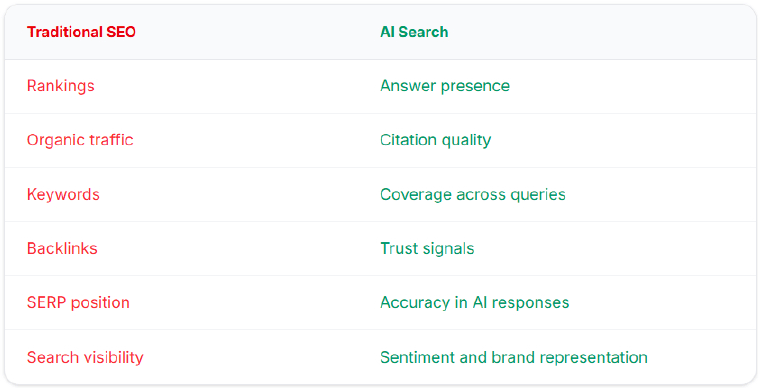
The shift to Al search doesn’t require an entirely new SEO strategy. It requires a more disciplined version of the one you should already have. The fundamentals clear content, strong entity signals, structured information – are what both Google and Al engines reward. What’s different is where to look for performance data.
- Audit your owned content for answer-readiness answer the questions buyers actually ask? do your service pages clearly
- Check your entity consistency does your brand name, category description, and core offering appear consistently across your site, GBP, and key directories?
- Test your Al search presence – search your primary category terms on ChatGPT and Perplexity and record where and how you appear
- Create comparison and evaluation content that intercepts buyers in the research phase, before they’ve decided which platforms to evaluate
- Track citation presence over time not just rankings
KEY TAKEAWAY
Al search has moved from “emerging trend” to primary research channel for B2B buyers. Brands that establish clear, consistent, structured owned content now will hold the citation positions that influence shortlists in 2026 and beyond. Brands that don’t will find themselves invisible at the most important moment in the buyer journey – before the buyer has even opened a comparison page.